.png)


How to Find Your Unique Voice as a Poet
Updated: Jun 24
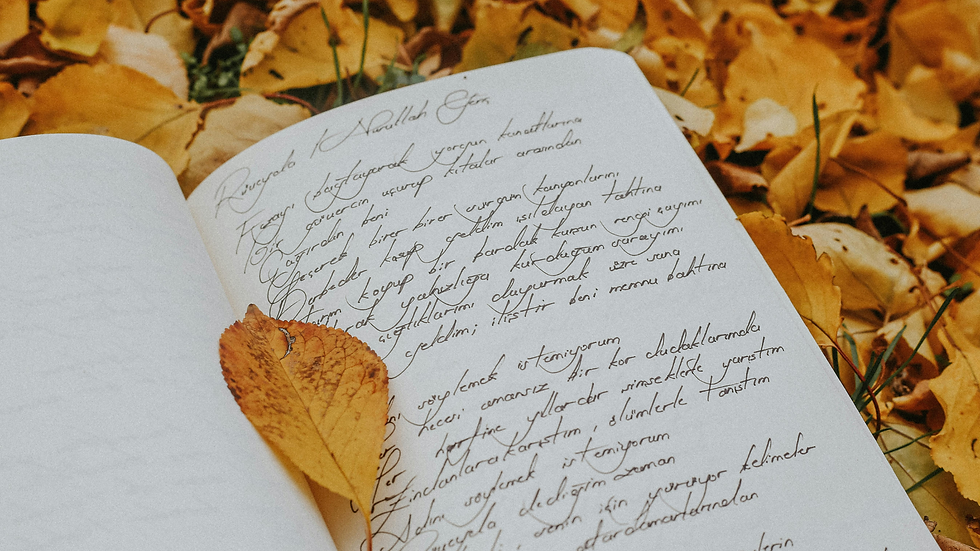
A poet's voice is sacred. We take great pride in how we uniquely see the world and in how we choose to illustrate these views through patterns of words and verses. However, have you ever felt your voice sounded a little similar to another poet? So similar, in fact, that you start to question whether your work is unique at all.
No worries. I know I have, and I think every poet has felt the same on their poet's journey–it's not a lost cause. In my debut poetry collection, Shadow Confessions: Raw Version, deciding on my overall voice was a crucial step. I'm almost embarrassed to admit that it probably took at least a year to finalize!
Let's help you discover and develop your authentic poet voice so your work is always unmistakably yours.
What Does “Voice” Mean in Poetry?
We can get really technical with this definition: voice is the combination of tone, style, perspective, and language that makes your poems unique. Sure, but what does that mean?
Your voice as a poet is what allows readers to recognize and connect with your work over and over again. Just like the sound of a familiar friend or loved one, when you read a poet you connect with, you get the same feeling as if they were speaking their poetry right in front of you.
Your voice could be clear, soothing, spiritual, intellectual, heart-wrenching, or a combination of a few. How you choose to show your work to the world is your voice, and it’s important to develop it in a way you feel proud.
Explore Your Influences
What poets and writers have touched your soul in the past? Why do their words draw you in?
Chances are that if you are drawn to certain poets, this is a voice you enjoy and connect to yourself. You can start finding your voice by looking at the writers who influence you and practicing this style without copying.
Read one of your favorites and think about how you would respond to this writer with your words in a similar voice. Practice the imagery and style within your own work. This practice is kind of a springboard for then creating your own unique voice based on what already interests you.
Write and Experiment Often
Write. Write, write, write, write, write. You have to write often to find your voice, or you’ll continue to see your work as an imitation of others. Here are some ideas to get you started:
Experiment with different forms (free verse, haiku, sonnet). develop
Develop a daily unconscious writing practice (Morning Pages)
Play with different subjects (nature, grief, love)
Keep a journal of random observations to write about later
Pin to read later!

Recurring themes and images
I had a really hard time figuring out what my first poetry collection would be until I took this step. I laid out all my poems and looked for recurring metaphors, subjects, emotional tones, and so on.
Once I connected the dots, I found my authentic style and interests. I finally settled on a theme for my book and created a cohesive flow with the poetry I already had, putting together a first draft.
Embrace personal experiences
Your life, overall (no matter how boring you think it may be), will be your greatest resource for finding your voice. Your memories, experiences, challenges, and triumphs all have a story. How would you tell these stories in a creative way?
Journaling and free writing are the best for this step. I often carry a journal or my Freewrite with me to capture moments and memories I want to write about later. Include every detail! Most importantly, be vulnerable–poetry is not shy of emotion.
Don’t give up and care for yourself
Don’t worry if it takes a lot of practice to discover your voice. Your voice evolves over time, and it’s no wonder poets can appear so tortured all the time. They are constantly looking for themselves, even as they continue to change.
Focus more on consistency and explore your curiosity. Remember that poetry is supposed to be beautiful and your soul on a page. It’s not about being perfect or marketable. It’s your way of telling your experiences and perspective through your eyes in only the way you see it.
Your poetic voice is an art. Love it and be patient with it. Care for yourself when needed. Self-care for poets is essential.
Until next time, dreamers,

Disclaimer: This blog contains Amazon Affiliate links. As an Amazon Associate, I earn from qualifying purchases to help fund my dream of being a published author and poet. I love and appreciate you so much!


Comments